
High-end pool water feature options are defined as custom-engineered hydraulic installations that add movement, sound, and visual drama to luxury swimming pools. Residential installations have risen 23% since 2024, with documented property value uplifts of 5–8%. These features go well beyond decoration. They improve water circulation, extend evening pool use, and signal the kind of design investment that sets a property apart. The right feature, integrated at the design phase, delivers returns that a late-stage retrofit rarely matches.
1. High-end pool water feature options: the complete list
The industry term for this category is “custom aquatic features,” though homeowners and developers commonly search for premium or luxury water features. The eight types below represent the full spectrum of ultra luxury pool feature options, from subtle to spectacular.
2. Sheer descents
A sheer descent produces a flat, glass-like sheet of water that falls from a raised wall or raised bond beam into the pool below. The effect is architectural and modern, with no turbulence and very little noise. Sheer descents integrate LED lighting for 24/7 visual impact, shifting color with a smartphone app or a preset schedule. They suit geometric pools and contemporary homes where clean lines matter more than organic drama.
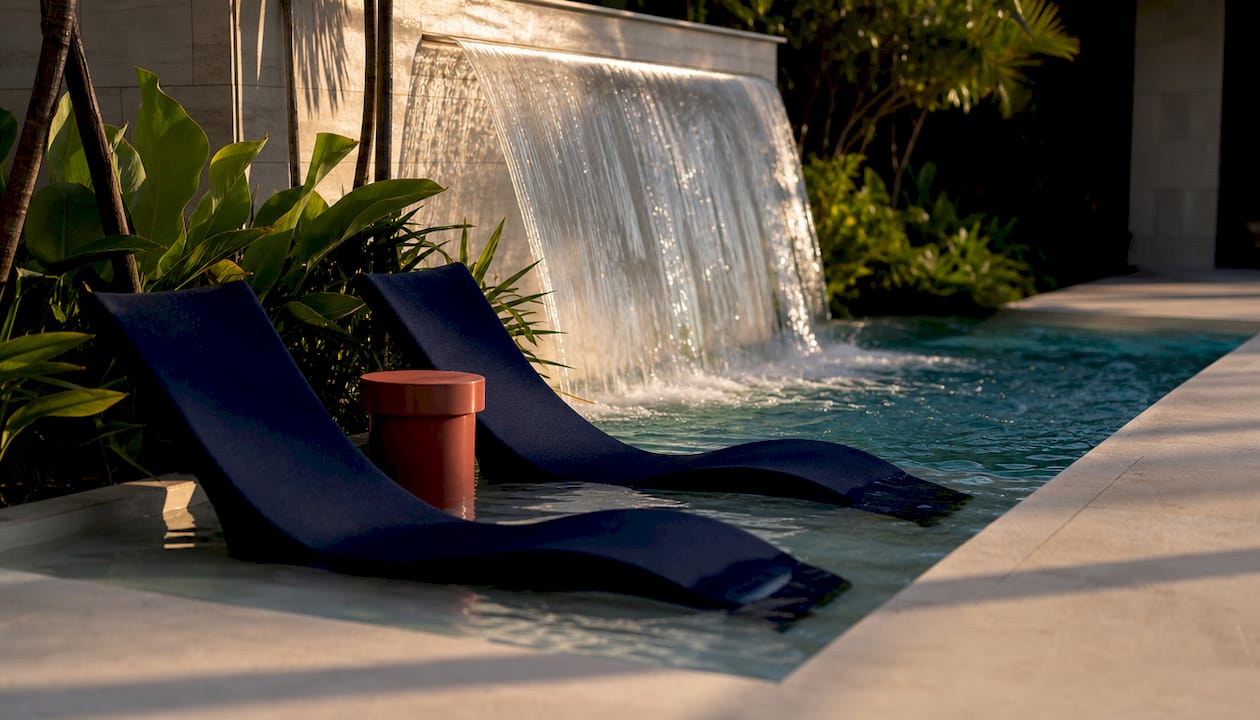
Pro Tip: Pair a sheer descent with a dark-finish pool wall to maximize the glass-water effect at night. The contrast makes the LED color pop far more than a white or light-gray surface.
3. Rain curtains
A rain curtain releases dozens of individual water streams from a horizontal header pipe, creating a theatrical veil of falling water. The look is refined and spa-like, and it works equally well on a pool wall, a pergola edge, or a freestanding architectural element. Theatrical lighting behind or beneath the curtain turns the feature into a focal point after dark. Rain curtains require precise hydraulic calibration so every stream falls at the same rate. That calibration is best handled during the original pool design, not as an afterthought.
4. Natural rock waterfalls
A natural rock waterfall is the defining feature of resort-style pools. Boulders and natural stone are stacked and mortared to create a cascade that looks like it belongs in a tropical landscape. The sound is immersive. The visual weight anchors the entire outdoor space. Aquabluepools builds these features with locally sourced stone to match the Lowcountry’s natural palette, blending the pool into its surroundings rather than imposing on them. Grottos and cave elements can be carved into the rock structure, adding a private, high-impact retreat within the pool itself.
5. Infinity edge spillways
An infinity edge, also called a vanishing edge or negative edge, creates the illusion that the pool water extends to the horizon. Water flows over one or more lowered walls into a catch basin below, then recirculates back into the pool. The effect is most powerful on elevated sites with a view, where the water appears to merge with a lake, ocean, or skyline. Aquabluepools designs infinity pools across the Lowcountry, where the flat coastal terrain and tidal waterways make the visual payoff exceptional. The hydraulic engineering behind a true infinity edge is complex, which is why planning it from the start is non-negotiable.
6. Laminar jets and deck jets
A laminar jet shoots a smooth, transparent arc of water from a deck fitting into the pool. The stream is so clear that fiber-optic lighting can run through it, making the arc glow at night. Deck jets are a subtler version, arcing from lower deck fittings at a shallower angle. Both features work well in formal or contemporary pools where the goal is elegance rather than volume. Water chemistry directly affects laminar jet performance. High calcium hardness causes scaling inside the nozzle, which breaks the laminar flow and ruins the visual effect.
7. Bubblers and geysers
Bubblers are low-profile fittings installed in shallow tanning ledges or wading areas. They push a gentle column of water upward, creating soft movement and a pleasant sound without disrupting swimmers. Geysers produce a taller, more energetic column and work well as a playful accent in family pools. Both features are low-cost relative to other premium options and add sensory texture to areas that would otherwise feel static. They are also among the easiest features to retrofit into an existing pool, making them a practical starting point for homeowners adding water features to an established backyard.
8. Stacked stone cascades
A stacked stone cascade uses cut or split stone, such as travertine, bluestone, or slate, arranged in formal tiers to channel water down a structured face. The look is more architectural than a natural rock waterfall and suits transitional or Mediterranean-style homes. Maintenance is lower than a full rock grotto because the smooth stone faces resist algae buildup better than rough boulders. The formal geometry also makes it easier to integrate LED strip lighting along each tier, creating a layered lighting effect at night.
9. How smart automation and lighting elevate premium features
Smart controls have changed what homeowners can do with premium pool water features. Smartphone-based systems now let you adjust lighting color, pump speed, and water flow from anywhere, extending pool use well into the evening without walking to a control panel.
The most impactful technology behind the scenes is the Variable Frequency Drive, or VFD. VFD pumps save 40–60% in energy by modulating flow rather than running at full power constantly. That same modulation lets you dial a waterfall from a dramatic full-flow cascade down to a gentle trickle for background ambiance. One pump, one feature, multiple moods. Aquabluepools integrates pool automation systems into every luxury build, so lighting, flow, and temperature work together on a single platform.
Lighting safety matters as much as aesthetics. LED fixtures require an IP68 rating and operate on 12V or 24V DC systems for safe underwater use. Quality LEDs carry a rated lifespan of 50,000 hours, meaning they will outlast most pool renovations. DMX lighting protocols allow color and intensity to sync with music or follow a programmed schedule, which is the standard approach in resort and high-end residential builds.
Pro Tip: Program a “sunset mode” that gradually shifts your water feature lighting from white to amber to deep blue over 30 minutes. It mirrors the natural light change and makes the transition from afternoon to evening feel intentional.
10. Cost and maintenance: what to budget for luxury water features
Standard waterfall systems start at $5,000 and reach $80,000 for complex architectural designs. Fully bespoke features, such as large grottos, multi-tier infinity edges, or custom fountain sculptures, can exceed $200,000. Those numbers cover materials and installation. They do not always cover the hidden costs that catch homeowners off guard.
The biggest hidden expense is hydraulic infrastructure. Large waterfalls and infinity edges need dedicated pumps and dedicated piping runs. Retrofitting hydraulic power after construction costs two to three times more than planning for it upfront. Electrical systems for LED lighting and smart controls add further cost if not included in the original pool design. Working with a pool builder who handles hydraulic engineering from day one is the most direct way to control total project cost.
Maintenance costs vary significantly by feature type:
- Sheer descents and laminar jets require regular nozzle cleaning and strict water chemistry management to prevent scaling.
- Natural rock waterfalls need periodic algae treatment on stone surfaces and inspection of mortar joints.
- Infinity edges require catch basin cleaning and pump maintenance on a consistent schedule.
- Bubblers and deck jets are the lowest-maintenance option, needing only seasonal nozzle checks.
Water features improve circulation and oxygenation, which benefits overall water quality. That functional benefit partially offsets maintenance effort, because a well-circulated pool needs fewer chemical corrections over time. Pair pool and hot tub wiring with proper electrical planning from the start to avoid costly rework on lighting and pump systems.
11. Selecting the right feature for your property
Matching a water feature to your pool requires four decisions made in sequence.
-
Define the design language. Contemporary pools suit sheer descents, rain curtains, and laminar jets. Organic or resort-style pools suit natural rock waterfalls and grottos. Transitional homes work well with stacked stone cascades or infinity edges.
-
Assess available space. A grotto needs significant horizontal and vertical space behind the pool wall. An infinity edge requires an elevated site or a constructed grade change. Bubblers and deck jets fit almost any footprint.
-
Choose one focal point, then layer. The most effective luxury pools lead with one dramatic feature and support it with two or three quieter elements. A natural rock waterfall as the anchor, paired with deck jets and a bubbler shelf, creates a layered sensory experience without visual clutter.
-
Plan for new build vs. retrofit. Integrating water features at the design phase produces better architectural harmony and lower total cost. Retrofitting is possible, particularly for bubblers, deck jets, and sheer descents, but it limits your hydraulic options and raises installation cost.
Aquabluepools works with homeowners and developers across Charleston, Bluffton, and Hilton Head Island to match features to sites, budgets, and design goals. The luxury pool trends shaping the Lowcountry right now favor smart-integrated features that perform as well at 10 PM as they do at noon.
Key takeaways
The most effective luxury pool water features combine hydraulic planning, smart automation, and design integration from the earliest stage of construction.
| Point | Details |
|---|---|
| Plan hydraulics early | Retrofitting dedicated pump systems costs two to three times more than building them in from the start. |
| Match feature to design style | Contemporary pools suit sheer descents; resort-style pools suit natural rock waterfalls and grottos. |
| Use VFD pumps | Variable Frequency Drives cut energy use by 40–60% and give you adjustable flow for multiple ambiance settings. |
| Prioritize LED safety specs | Underwater fixtures must carry an IP68 rating and run on 12V or 24V DC for safe, long-lasting performance. |
| Layer features for depth | One dramatic focal point paired with two quieter features creates a richer experience than a single statement piece. |
What most homeowners get wrong about water features
The most common mistake I see is treating a water feature as a finishing touch. Homeowners finalize their pool design, approve the construction contract, and then ask about adding a waterfall. By that point, the hydraulic infrastructure is already set. Adding a high-volume feature means breaking concrete, rerouting pipes, and upgrading pump systems. The cost doubles or triples for what should have been a straightforward installation.
The second mistake is undervaluing the quiet features. Everyone wants the dramatic rock grotto or the infinity edge, and those are genuinely spectacular. But a well-placed set of laminar jets or a bubbler shelf on a tanning ledge delivers daily enjoyment that a grotto, which most people swim past rather than into, does not always match. The features you interact with every time you get in the pool matter more than the ones you photograph once.
The trend I find most interesting right now is the move toward minimalist smart features. Sheer descents with programmable LED color, controlled by a phone, are replacing elaborate rock structures in contemporary builds. The maintenance is lower, the aesthetic is cleaner, and the technology makes the feature feel alive without requiring a landscape crew to manage it. That shift reflects a broader change in how luxury homeowners think about outdoor spaces: less about spectacle, more about daily livability.
— SEO
Aquabluepools: custom water features built for the Lowcountry
Aquabluepools has designed and built custom luxury pools across Charleston, Bluffton, Hilton Head Island, and Beaufort since 1991. Every project integrates water features from the hydraulic planning stage, so sheer descents, infinity edges, natural rock waterfalls, and smart lighting systems perform exactly as designed from day one.
As the region’s only Master Pool Builder, Aquabluepools brings more than 100 years of combined industry experience to every build. Whether you are planning a new luxury pool with custom water features or adding premium elements to an existing pool, the team handles design, engineering, and construction under one roof. Visit the luxury pool builders page to see completed projects and start a conversation about your property.
FAQ
What is a pool waterfall feature?
A pool waterfall feature is a hydraulic installation that moves water from an elevated point into the pool, creating sound, movement, and visual interest. Types range from natural rock cascades to architectural sheer descents and rain curtains.
How much do high-end pool water features cost?
Standard waterfall systems start at $5,000 and reach $80,000 for complex designs. Fully custom features such as grottos or multi-tier infinity edges can exceed $200,000, with additional costs for dedicated hydraulic systems and electrical work.
Can I add a water feature to an existing pool?
Yes, but options are limited by existing hydraulic infrastructure. Bubblers, deck jets, and smaller sheer descents are the most practical retrofits. Large waterfalls and infinity edges are best planned during original pool construction.
What are the best water features for a contemporary pool?
Sheer descents, rain curtains, and laminar jets suit contemporary pools best. They produce clean lines, integrate LED lighting easily, and require less maintenance than organic rock features.
Do water features affect pool water quality?
Water features improve circulation and oxygenation, which supports water clarity and reduces chemical demand. However, features like laminar jets require strict water chemistry management to prevent scaling and nozzle clogging.