

Custom pool designs for golf community homes are defined by one requirement above all others: the pool must work with the golf course, not against it. These are not standard backyard pools. They are site-specific, view-driven, and subject to HOA architectural guidelines that shape every decision from pool height to fencing material. Luxury custom pools in golf communities typically start at $120,000 and climb well past $200,000 depending on features and site complexity. That investment reflects a design standard where infinity edges, integrated spas, and fire features are expected, not optional.
1. What are premium architectural features in golf community pool designs?
The most requested feature in golf community pool design is the infinity edge, also called a vanishing edge or negative edge pool. The water appears to dissolve into the fairway beyond, creating a visual connection between your backyard and the course. Perimeter overflow pools achieve a similar effect with water sheeting over all four sides, producing a mirror-like surface that reflects the surrounding landscape.
Beyond the edge treatment, these features define the best golf community pools:
- Sun shelves: Shallow, submerged platforms (typically 6–12 inches deep) where you can set lounge chairs in the water. They work for adults relaxing and for young children playing safely.
- Integrated spas: A spa attached directly to the pool shares the same water system and visual footprint. It extends the pool’s usability into cooler months without adding a separate structure.
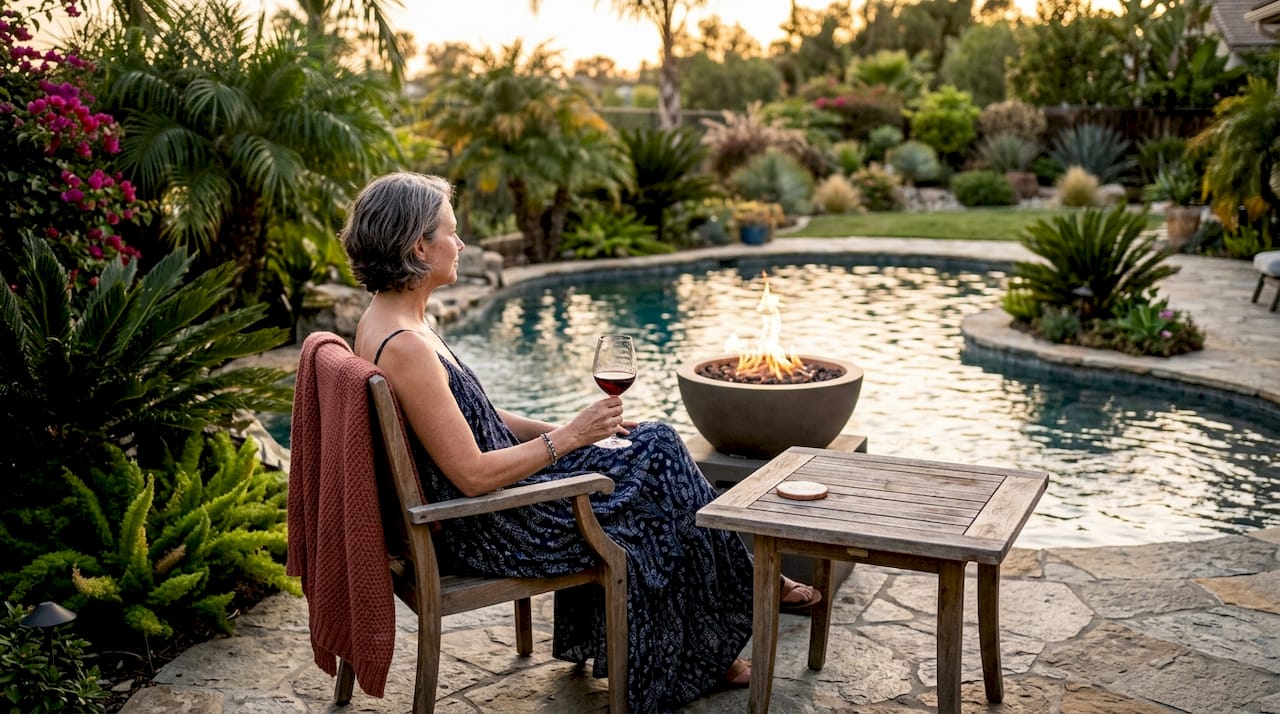
- Fire features: Raised fire bowls or linear fire walls positioned at pool corners create evening ambiance and define the outdoor room. They also provide a visual anchor that draws the eye away from the pool edge and toward the view.
- Outdoor kitchens and expanded decking: Fire and water elements, outdoor kitchens, and wide decking surfaces turn the pool area into a full outdoor living space rather than just a swimming area.
Pro Tip: Place fire features on the side of the pool closest to your home, not the fairway side. This keeps the view corridor open and creates a natural progression from indoor living to pool to golf course.
The combination of these elements is what separates a golf community pool from a standard residential pool. Each feature serves a specific lifestyle function while reinforcing the visual connection to the course.
2. How can pool layouts optimize views and complement golf course aesthetics?
Pool orientation is the single most consequential design decision on a golf course lot. A pool placed parallel to the fairway preserves the full width of the view. A pool placed perpendicular to the fairway cuts the sightline in half. Rectangular pools work well on lots with clean, linear fairway views. Freeform pools suit lots with curved or naturalistic course edges where a geometric shape would look out of place.
| Layout Strategy | Best For | View Impact |
|---|---|---|
| Parallel rectangular | Straight fairway lots | Maximum sightline width |
| Freeform organic | Curved or wooded course edges | Natural integration |
| L-shaped | Corner lots with two fairway exposures | Dual view preservation |
| Elevated infinity edge | Sloped lots above the fairway | Dramatic visual drop |
Open deck layouts with low or no barriers on the fairway side preserve the view at eye level when seated. Raised planters, tall fencing, or dense landscaping on the course side are the most common mistakes homeowners make after construction. They solve a privacy problem but create a view problem.
Panoramic screen enclosures protect from insects and errant golf balls while preserving fairway views. These enclosures require specialty framing materials and low-profile screen systems engineered specifically to maintain sightlines. Standard screen rooms use heavier framing that interrupts the view. In warm climates like the South Carolina Lowcountry, a well-designed panoramic enclosure extends pool use across all four seasons.
- Align the pool’s longest axis with the fairway
- Keep deck furniture and structures below the sightline from interior living spaces
- Use glass or cable pool fencing instead of solid barriers on the course-facing side
- Select screen enclosure systems rated for golf ball impact with minimal frame obstruction
3. What multi-functional pool types best serve golf community homeowners?
Golf community living now emphasizes an experiential model where pools serve the entire household, not just swimmers. The pool is the social center for family members who do not golf, including children and non-golfing spouses. Choosing the right pool type means matching the pool’s function to how your household actually lives.
- Lap pools: A lap pool is typically 40–75 feet long and 8–10 feet wide. It serves homeowners who use swimming as a primary fitness activity. On a golf course lot, a lap pool oriented parallel to the fairway doubles as a view-maximizing design element.
- Zero-entry recreation pools: A zero-entry pool, also called a beach-entry pool, slopes gradually from the deck into the water. It works for families with young children and older adults who find steps difficult. The gradual entry also creates a natural sun shelf effect across a larger area.
- Multi-zone aquatic designs: These pools divide the water into distinct functional areas: a shallow play zone, a deep swimming zone, and an attached spa. Multi-use aquatic designs supporting fitness, wellness, and social gatherings attract younger, lifestyle-focused residents in golf communities. This trend mirrors what private clubs are building at the community level.
- Plunge pools: For smaller lots or homeowners who prioritize hydrotherapy over swimming, a plunge pool (typically 10–15 feet long) delivers spa-like benefits in a compact footprint. They pair well with outdoor kitchens and fire features on tighter golf course lots.
Pro Tip: If your household includes both active swimmers and social entertainers, a multi-zone design with a dedicated lap lane and a separate shallow social area delivers more daily use than a single-purpose pool.
4. What are key considerations for building pools in gated golf communities?
Site engineering and HOA compliance are the two factors that most homeowners underestimate before starting a golf community pool project. Both can add significant time and cost to a project that looks straightforward on paper.
HOA architectural guidelines in golf communities typically govern:
- Pool height and water surface elevation: Many HOAs restrict how high the pool deck or water surface can sit relative to the fairway grade. This directly affects whether an infinity edge is feasible.
- Fencing and barrier materials: Glass, aluminum, and wrought iron are commonly approved. Solid wood or vinyl privacy fencing is often prohibited on the course-facing side.
- Screening materials and enclosure height: Panoramic screen systems must meet HOA specifications for frame color, screen density, and maximum height.
- Equipment placement and screening: Pool equipment pads, heaters, and pumps must be screened from the fairway and neighboring lots according to HOA rules.
Site grading on golf course lots adds another layer of complexity. Lots that slope toward the fairway require retaining walls to create a level pool deck. Those retaining walls must be engineered to handle hydrostatic pressure and comply with HOA height limits. Construction logistics in gated communities also require advance coordination. Staging areas, delivery routes, and working hours are all subject to community rules that can affect the project schedule.
Aquabluepools works directly with HOA architectural review boards across the Lowcountry to submit compliant designs and navigate approval processes before construction begins.
5. How do luxury pools enhance home value and lifestyle in golf communities?
Pools serve as daily social anchors for families in golf communities, supporting multi-generational engagement that extends well beyond golf. Every household member benefits from a pool. It gives non-golfers and children a reason to be outside, and it gives the home a social function that the golf course alone cannot provide.
“The pool is where the family actually gathers. Golf brings people to the community, but the pool keeps them home.”
From a real estate perspective, pools increase buyer interest and reduce days on market, particularly in warm-climate golf communities during spring and summer. A golf course lot with a well-designed pool attracts a larger buyer pool than the same lot without one. That is a measurable advantage in a competitive market.
The financial picture is more nuanced on the cost side. The initial capital investment in a luxury pool often exceeds its immediate resale premium. The true return is measured in years of daily enjoyment, not a single sale price. Homeowners who frame the pool as a lifestyle asset rather than a pure financial investment make better design decisions. They choose features that serve their household’s actual habits rather than features they assume future buyers will want.
Key Takeaways
The best pool designs for golf community homes succeed by aligning every design decision, from pool shape to screen enclosure framing, with both the fairway view and the household’s daily lifestyle.
| Point | Details |
|---|---|
| Infinity edges preserve views | Vanishing-edge and perimeter overflow pools maintain visual connection to the golf course fairway. |
| HOA compliance shapes design | Architectural guidelines govern pool height, fencing, and screening before a single permit is filed. |
| Pool type should match lifestyle | Multi-zone, lap, and zero-entry pools each serve different household needs beyond basic swimming. |
| Site engineering is non-negotiable | Sloped golf course lots require retaining walls and grading plans that affect cost and timeline. |
| Lifestyle ROI outweighs resale math | The real return on a luxury pool is daily use and buyer appeal, not a direct dollar-for-dollar resale premium. |
What I’ve learned about golf community pools that most articles won’t tell you
After spending years watching homeowners plan pools on golf course lots, the pattern I see most often is this: people design for the view they have on day one and forget to design for the life they will actually live in year three.
The infinity edge is the right call on most golf course lots. That part is straightforward. What surprises homeowners is how much the social function of the pool shifts once it is built. The pool becomes the household’s primary gathering space. It is where the family spends weekend mornings, where neighbors stop by, and where non-golfers find their reason to be outside. Designing only for aesthetics and ignoring the social layout of the deck, the kitchen placement, and the shade coverage is the most common and most expensive mistake I see.
The other thing I have noticed is that homeowners consistently underestimate HOA timelines. Architectural review in gated golf communities can take 30–90 days, and a single revision request resets that clock. Working with a builder who has existing relationships with local HOA review boards is not a luxury. It is the difference between breaking ground in spring and breaking ground in fall.
My honest advice: spend as much time on the deck layout and the HOA submission as you spend on the pool shape itself. The pool is the centerpiece, but the deck is where you actually live.
— SEO
Aquabluepools: custom golf community pools in the Lowcountry
Aquabluepools has designed and built luxury custom pools for golf community homes across Charleston, Bluffton, Hilton Head Island, and the surrounding Lowcountry since 1991. As the region’s only Master Pool Builder, Aquabluepools brings more than 100 years of combined industry experience to every project, from initial site assessment and HOA submission through construction and long-term maintenance.
Every golf community pool Aquabluepools builds starts with a site-specific design that accounts for fairway orientation, HOA guidelines, and the household’s lifestyle priorities. Whether you are planning an infinity-edge pool with an integrated spa or a multi-zone family pool with a lap lane, Aquabluepools delivers the design and construction expertise to get it built right. Start your project with a consultation today.
FAQ
How much do pool designs for golf community homes cost?
Luxury custom pools in golf communities start around $120,000 and regularly exceed $200,000 depending on features, site engineering requirements, and HOA compliance work. Infinity edges, integrated spas, and panoramic screen enclosures each add to the base cost.
Do I need HOA approval before building a pool on a golf course lot?
Yes. Golf community HOAs require architectural review and approval before construction begins. Guidelines typically cover pool height, fencing materials, screen enclosure specifications, and equipment screening.
What pool shape works best on a golf course lot?
A rectangular pool aligned parallel to the fairway preserves the widest sightline. Freeform pools suit lots with curved or naturalistic course edges where a geometric shape would look out of place.
Does a pool increase home value in a golf community?
Pools increase buyer interest and reduce days on market in warm-climate golf communities, particularly during spring and summer selling seasons. The lifestyle premium is real, though the direct resale dollar return typically does not equal the full construction cost.
What is a panoramic screen enclosure and why does it matter?
A panoramic screen enclosure uses low-profile framing and specialty screen materials to protect the pool area from insects and golf balls while keeping fairway views unobstructed. Standard screen rooms use heavier framing that interrupts the sightline, making the panoramic system the preferred choice on golf course lots.